Last updated: 26 August 2026
Vitamin D is one of the few nutrients that huge numbers of people fall short on, vegans and meat-eaters alike. It matters even more if you live somewhere like the UK or a place with a similar climate, where the winter sun isn’t strong enough to help you there.
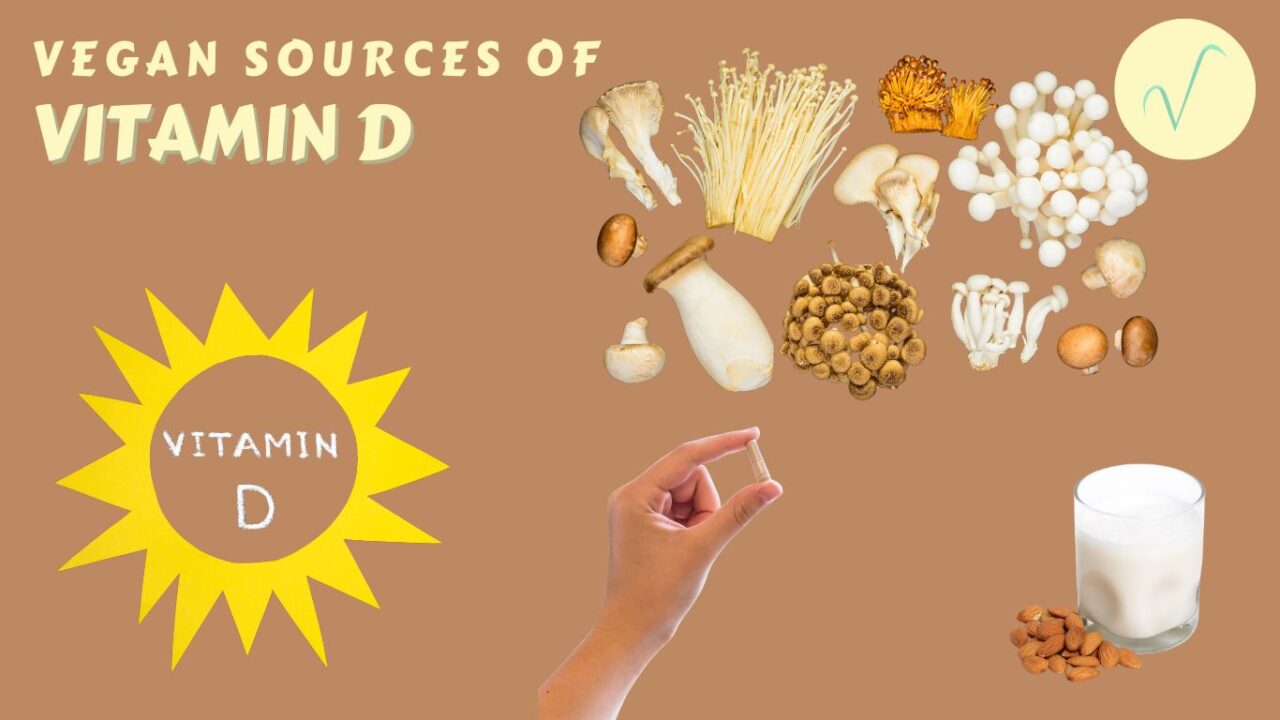
The best vegan sources of vitamin D are UV-exposed mushrooms, fortified foods like plant milks and cereals, good ol’ fashioned sunlight, and supplements through the winter. You can indeed cover your vitamin D without meat or dairy, though it takes a little planning.
Do vegans get enough vitamin D?
In a recent study, it was concluded that there was no main differences between vegan and non-vegan groups – in terms of vitamin D levels.
So as a vegan it’s good to know you’re not at a disadvantage; to be weary and know the best ways to get your vitamin D in your daily diet.
Our list of vegan food sources of vitamin D
Honestly, vegans do tend to have a lower levels than meat-eaters, so this is worth being aware of rather than waved away. The EPIC-Oxford study found vegans had the lowest average vitamin D intake of any diet group, roughly a quarter of what meat-eaters got.
That said, a reason to be cautious, not concerned. Vitamin D is scarce in all foods, vegan or not, which is why sunlight and fortified foods do most of the work.
Vegan-friendly vitamin D sources
| Source | Vitamin D per serving | Type |
| UV-exposed mushrooms (100g) | ~140 to 1,000+ IU (varies with UV dose) | D2 |
| Fortified plant milk (1 cup) | ~100 IU (2.5 mcg), some up to ~200 | D2 or D3 |
| Fortified breakfast cereal (per serving) | ~40 to 100 IU (check the pack) | D2 or D3 |
| Fortified yoghurt or orange juice | ~100 IU typical | Varies |
| Summer sunlight | Your body makes its own | D3 |
| Lichen-based D3 supplement | 10 mcg (400 IU) and up | D3 (vegan) |
Source: NIH office of dietary supplements
Mushrooms
In this case, we’re talking UV treated mushrooms that you can access from the supermarket year-round.
There’s debate on the topic as mushrooms only provide you with vitamin D2, arguing that you’re better off with D3. Although being a notorious source of vitamin D, mushrooms only provide you with 10-50% of your DRV – but this figure is based on wild foraged outdoor mushrooms.
How can you enrich mushrooms with vitamin D at home?
You can boost a mushroom’s vitamin D yourself by laying them out gills-up in direct midday sun; roughly between 10am and 3pm when UV is strongest, for anywhere from 15 minutes to a couple of hours.
This varies a lot with sun strength and season, and works best in the summer months and not much at all in a British winter.
Dried shop-bought mushrooms that have already been UV-treated are a reliable year-round alternative if the weather isn’t cooperating.

Fortified foods
Fortified foods are where most vegans will get the bulk of their dietary vitamin D, because it’s added deliberately to a range of vegan-friendly foods, which include:
- Plant milks (soya, oat, almond), from brands like Oatly and Alpro
- Fortified yoghurt alternatives
- Breakfast cereals
- Fortified orange juice
A typical fortified plant milk carries around 100 IU (2.5 micrograms) per cup, with some brands going up to about 200.
The important caveat is that fortification is optional and varies brand to brand. Some organic ranges aren’t fortified at all, so it genuinely pays to read the label if this is your main source.
Sunshine
Sunlight is the best source of vitamin D there is, for the sunnier parts of the year. Your skin makes D3 directly from UVB rays, and in the summer a bit of midday sun does the job better than any food.
From about late March to the end of September, most people can make all the vitamin D they need from sunlight on bare skin, between 11am and 3pm. From October to March, the sun sits too low for your skin to make any, which is exactly when food and a supplement matter most.
How long you need depends on your skin tone and where you live. As a rule of thumb: short, regular exposure beats one long session in the sun every time.

Is vitamin D3 vegan?
Whether D3 is vegan depends entirely on where it came from. There are two forms of the vitamin: D2 (ergocalciferol), which is plant or fungi-derived (naturally vegan), and D3 (cholecalciferol), which is the form your body makes and absorbs best.
What is vegan vitamin D3 made from?
Most standard D3 supplements are made from lanolin, the grease from sheep’s wool, so they aren’t vegan. The vegan version is made from lichen, a hardy little organism that naturally produces D3.
It’s chemically the same D3, just without the animal source, which is why lichen-based supplements are the go-to for vegans.
If a label just says “vitamin D3”, check for a “vegan” or “from lichen” note; by default it’s usually wool-derived.
Do any vegetables or fruits contain vitamin D?
In short, no fruits and veg are rich enough in vitamin D to be noteworthy. The honest answer is that vegetables and fruits contain virtually no vitamin D, however healthy they are otherwise.
A common misconception is when mushrooms are involved, i.e. UV-exposed mushrooms, which are technically a fungus.
Your realistic vegan options are: mushrooms, fortified foods, sunlight, and a supplement.
Should vegans take a vitamin D supplement?
All vegans should take a vitamin D supplement, especially through the darker months. The NHS recommends everyone consider a daily supplement of 10 micrograms (400 IU) over autumn and winter, and year-round if you get little sun, have darker skin, or usually stay covered up.
For vegans, who tend to start a little lower anyway, it’s the most reliable single step you can take. A quick absorption tip: vitamin D is fat-soluble, so take it with a meal that contains some fat.
What types of vitamin D supplements are there?
Most people only ever need an oral vitamin D supplement, which comes in a few formats:
- Tablets and capsules: The standard, cheapest option
- Sprays and drops: Handy if you dislike swallowing tablets, and taken under the tongue
- Gummies: Easy to remember, though often lower-dose, so check the amount, and check the label
For vegans, the key thing is to choose a lichen-based D3, or a D2 product, rather than the default wool-derived D3 – Always read the label!
Then there’s the vitamin D injection, a high-dose shot given by a doctor. That’s not an everyday supplement; it’s used in cases of significant deficiency, under medical supervision, so it’s something your GP would arrange rather than something you’d pick off a shelf.
Is the vitamin D injection vegan?
In short, usually not, so it’s worth asking. Injectable vitamin D is typically high-dose D3 (cholecalciferol), mostly lanolin-derived, and vegan injectable versions are rare.
If you’re ever prescribed one, ask your GP or pharmacist about the source and whether there is an equivalent vegan dose that could work for you instead – you don’t ask, you don’t get.
For day-to-day top ups, an oral lichen-derived D3 is the dependable vegan route.
Are meat and dairy better sources of vitamin D?
You may be surprised to find out that Vitamin D levels in meat and dairy are actually quite inconsistent, varying by country, cut, and farming method. A good deal of how much vitamin D is available actually comes from the animals themselves being supplemented, rather than anything inherent to the food itself.
A fortified plant milk with a stated figure on the label, plus a supplement in winter, is actually a more predictable source than a cut of meat whose vitamin D content is negligible. Whether you’re vegan or not.
Signs of vitamin D deficiency
Vitamin D deficiency is common and often quiet, but there are some recognised signs worth knowing. On the physical side, the usual ones include:
- Persistent tiredness or fatigue
- Getting ill more often than usual
- Aching bones, muscles, or general muscle weakness
There are also mental side effects to Vitamin D deficiency. Low vitamin D has been linked with low mood and with seasonal affective disorder (SAD), the dip in mood that arrives with the darker months.
It’s key to clarify here that vitamin D isn’t a treatment for depression, but it’s a reasonable thing to have checked if your mood drops each winter.
If you suspect you’re low on your levels, the only way to know is a simple blood test. It’s best to see your GP rather than guessing at a dose.
Your vegan vitamin D routine
Pulling it together, a dependable vegan vitamin D routine looks like this: UV-exposed or home-sunned mushrooms and fortified foods in your regular diet, a bit of summer sun while it’s around, and a daily lichen-based D3 supplement from October to March, or year-round if you get little sun.
Vitamin D is one of the few nutrients worth being a touch organised about, but is generally easy to maintain once the right habits are in place. Share this with someone who says they get all their vitamins from their everyday, omnivorous diet.