Last updated: Saturday, 5th September 2026
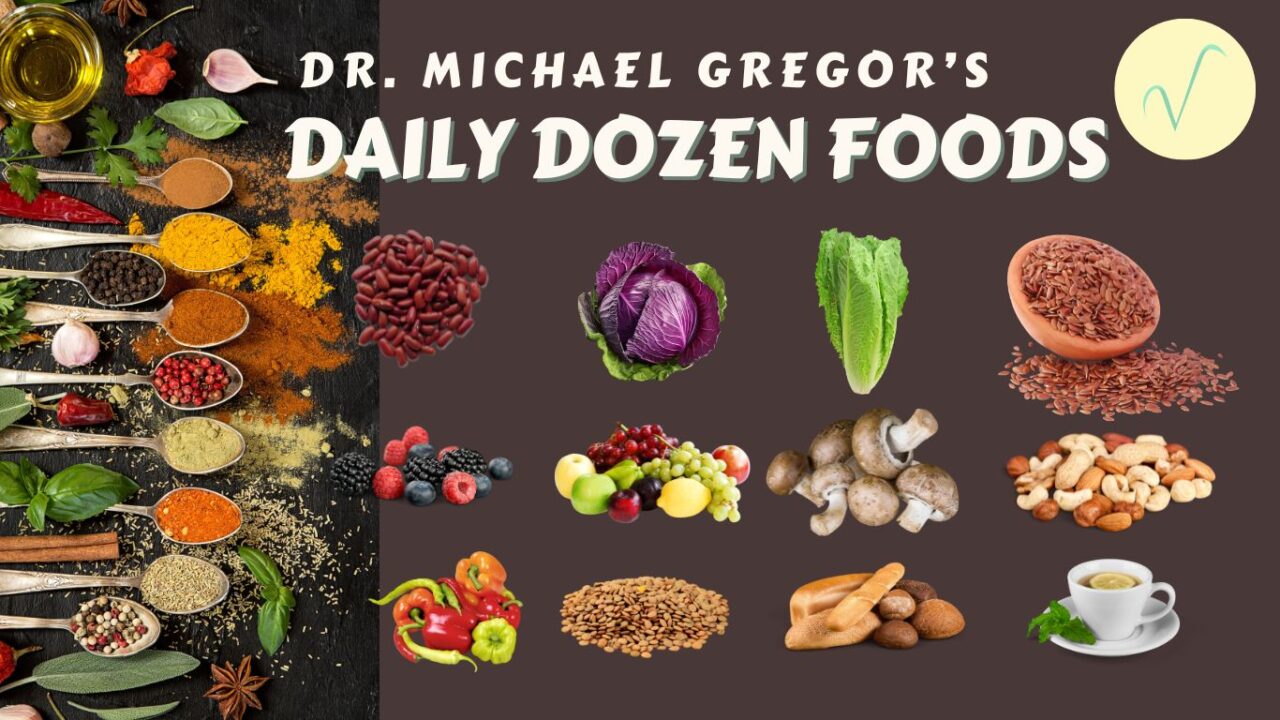
Dr Greger’s Daily Dozen is a simple checklist of 12 things to work into your day. It comes from Dr Michael Greger’s book How Not to Die, and the idea is that if you tick most of these boxes most days, the rest of a healthy diet largely takes care of itself.
How Not to Die is genuinely one of my favourite books I’ve ever read on nutrition. Not only does it prove a well planned plant-based diet suits good health, it handed over practical, transparent takeaways, such as the Daily Dozen.
Dr. Greger has a knack for making nutrition feel like a bit of this and a bit of that, with budget-friendly tips along the way, like using frozen or tinned fruit and veg to tick boxes off cheaply.
Read on for Dr Michael Greger’s Daily Dozen foods, complete with the servings he suggests, and why each one earns its place. Full credit to Dr Greger and his non-profit, nutritionfacts.org, where all of this is laid out in more depth.
Beans
Anything from black beans and butter beans to chickpeas, edamame, green peas, lentils, tempeh, and tofu counts as beans. These tend to be the “meat” of a plant-based meal, and Dr. Greger recommends 3 servings a day.
A serving looks like:
- 60g hummus or bean dip
- 130g cooked beans, lentils, or peas
- 150g fresh peas or sprouted lentils
Why beans?
Greger points to beans as a cornerstone food, linked in research to benefits for heart health, and lentils in particular for being especially nutrient-dense. Worth a go in a brown lentil lasagne if you’ve not tried it.

Berries
Any berry counts, from açaí, blackberries, and blueberries to cranberries, goji berries, mulberries, raspberries, and strawberries. Dr. Greger recommends 1 serving a day.
A serving looks like:
- 60g fresh or frozen berries
- 40g dried berries
Why berries?
Berries are one of the most antioxidant-dense foods gram for gram, which is the main reason Greger singles them out. He also cites research suggesting they may help blunt the blood-sugar rise from a meal.

Other fruits
Everything else in the fruit bowl: apples, apricots, avocados, bananas, citrus, dates, figs, grapes, kiwis, lychee, mango, oranges, pears, pineapple, plums, pomegranate, and watermelon. Dr. Greger recommends 3 servings a day.
A serving looks like:
- 1 medium fruit
- 120g cut fruit
- 40g dried fruit
Why fruit?
Greger highlights plenty of individual fruits, the humble kiwi among them, citing studies that link it to immune support and, in some research, to improve sleep and easier digestion for people who experience IBS.
Good to know, and if you ask me, fruit is no chore.

Cruciferous vegetables
Broccoli, bok choy, Brussels sprouts, cabbage, cauliflower, kale, and watercress. Dr. Greger recommends 1 serving a day.
A serving looks like:
- 30 to 80g chopped
- 12g Brussels or broccoli sprouts
- 1 tbsp horseradish
Why cruciferous vegetables?
Dr. Greger flags this group for compounds studied for their role in protecting cells from DNA damage.

Greens
Leafy greens specifically: collard greens, kale, mixed salad leaves, spinach, and Swiss chard. Dr. Greger recommends 2 servings a day.
A serving looks like:
- 60g raw
- 90g cooked
Why greens?
Greens are included as some of the most nutrient-dense foods there are, citing research linking higher intakes to a lower risk of heart disease and stroke. A good reason to keep eating your greens.

Other vegetables
The non-leafy remaining veg: artichokes, asparagus, beetroot, peppers, carrots, courgettes, garlic, mushrooms, okra, onions, pumpkin, seaweed, squash, sweet potatoes, and yams. Dr. Greger recommends 2 servings a day.
A serving looks like:
- 50g raw or cooked non-leafy veg
- 125ml vegetable juice
- 7g dried mushrooms
Why these other vegetables?
Dr. Greger goes into the specific perks of each, with a genuinely interesting part on mushrooms and ergothioneine, an amino acid studied for its role in protecting DNA, found in oyster mushrooms. In other words: Eat your veggies!

Flaxseeds
Dr. Greger’s own favourite, and its own item on the list: 1 serving a day of ground golden or brown flaxseed (about a tablespoon).
Why flaxseeds?
Dr. Greger zooms in on flaxseeds, summarising research where it’s been correlated to lower blood pressure and positively impact breast and prostate cancer. On a plate they’re a nutty, crunchy addition to salads or pasta.

Nuts and seeds
Almonds, Brazil nuts, cashews, chia, hazelnuts, hemp seeds, macadamias, pecans, pistachios, pumpkin seeds, sesame, sunflower seeds, and walnuts. Dr. Greger recommends 1 serving a day.
A serving looks like:
- 30g nuts or seeds
- 2 tbsp nut butter
Why nuts and seeds?
Dr. Greger highlights the antioxidants, healthy fats, and research that links nut consumption to lower cardiovascular risk, noting studies where higher intake correlated with weight loss. He gives walnuts a particular nod for their overall profile.

Herbs and spices
A wide range: allspice, basil, bay leaves, cardamom, chilli powder, cinnamon, coriander, fenugreek, garlic, ginger, nutmeg, oregano, parsley, paprika, pepper, rosemary, thyme, turmeric, and others.
Dr. Greger singles out ¼ teaspoon of turmeric a day, with the rest used freely.
Why turmeric?
Greger makes turmeric the headline, citing a large body of research into its active compound, curcumin, and its links to lower inflammation. As with the other claims here, it’s an area of ongoing study rather than a cure-all.

Whole grains
Barley, brown rice, millet, oats, popcorn, quinoa, rye, spelt, teff, wholegrain pasta, and wild rice. Dr. Greger recommends 3 servings a day.
A serving looks like:
- 100g hot cereal, cooked pasta, or grains
- 50g cold cereal
- 1 tortilla or slice of bread
- ½ a bagel or English muffin
- 30g popped corn
Why whole grains?
Dr. Greger links whole grains to steadier blood sugar and their own anti-inflammatory effects, the fibre and intact bran doing much of the work that refined grains lose.

Beverages
Mostly teas are recommended as beverages: black, chamomile, earl grey, hibiscus, jasmine, lemon balm, moringa, nettle, oolong, peppermint, raspberry leaf, and white tea, alongside coffee and, of course, water. Dr. Greger recommends 5 glasses a day.
Why drink more?
Herbal teas are an easy way to fold in extra plant compounds without having to eat more, and Greger highlights some teas, such as nettle and moringa, as a good source of iron.
The chapter also makes the straightforward case for staying well hydrated, down to its effect on concentration and energy.

Exercise
The 12th item is exercise, and the one that’s easy to forget alongside the food list. Dr. Greger recommends around 90 minutes of moderate physical activity a day, such as a brisk walk, or 40 minutes of vigorous activity, such as a run or a proper cycle.
Why exercise?
Greger includes movement in the Daily Dozen because diet and activity work together, and the research he draws on links regular exercise to a lower risk of many of the same conditions the foods target.
You don’t need a gym membership: a brisk daily walk counts, and you can break it up throughout the day.
The Daily Dozen checklist
Here’s the whole daily dozen in a nutshell, so you can keep it handy.
| # | Item | Daily servings | Example serving |
|---|---|---|---|
| 1 | Beans | 3 | 130g cooked beans or lentils |
| 2 | Berries | 1 | 60g fresh or frozen |
| 3 | Other fruits | 3 | 1 medium fruit |
| 4 | Cruciferous veg | 1 | 30 to 80g chopped |
| 5 | Greens | 2 | 60g raw / 90g cooked |
| 6 | Other vegetables | 2 | 50g non-leafy veg |
| 7 | Flaxseeds | 1 | 1 tbsp, ground |
| 8 | Nuts and seeds | 1 | 30g, or 2 tbsp nut butter |
| 9 | Herbs and spices | — | ¼ tsp turmeric, plus others freely |
| 10 | Whole grains | 3 | 100g cooked, or 1 slice of bread |
| 11 | Beverages | 5 | 1 glass of water or tea |
| 12 | Exercise | — | 90 min moderate / 40 min vigorous |
How to hit the Daily Dozen in a day
12 boxes sounds like a lot until you see how much a single meal ticks off. A good day more or less builds itself:
- Breakfast: Porridge (whole grains) with berries, ground flaxseed, and a spoon of nut butter. That’s four boxes before you’ve properly woken up.
- Lunch: A big grain-and-bean bowl with greens, other veg, and a turmeric dressing. Beans, greens, other veg, herbs and spices, another grain serving.
- Dinner: A lentil and cruciferous-veg curry with brown rice, plus a piece of fruit after. Beans again, cruciferous, whole grains, fruit.
- Throughout the day: Water and a couple of herbal teas cover beverages, and a brisk walk covers exercise.
The key is to focus on combinations, not counting. Once a few staple meals are in rotation, you tend to hit most of the list without thinking twice about it.
Bonus: the supplements Dr Greger recommends
The Daily Dozen covers food and movement, but a few nutrients are hard to get reliably from any diet, plant-based or not, so Greger recommends supplementing these:
- Vitamin B12: at least 2,000 mcg once a week, or at least 50 mcg daily (cyanocobalamin).
- Vitamin D: around 4,000 IU a day if you don’t get enough sun, which for much of the UK means most of the year.
- Iodine: 150 mcg a day, from iodised salt, seaweed, or a supplement.
- Omega-3: 250 mg a day of algae-derived DHA.
The verdict: Dr. Michael Gregor’s Daily Dozen
The Daily Dozen’s real strength is that it turns “eat healthily” into something you can actually see and tick off. You don’t need to nail all 12 every single day, and treating it as a pass-or-fail test doesn’t do it justice. Start with one or two boxes you tend to miss, build from there, and it’ll soon become second nature.
For the full reasoning behind each, Dr Greger’s non-profit nutritionfacts.org is the place to go, and How Not to Die is well worth a read if this way of thinking about food appeals. It remains one of my favourite books on the subject.